Source Aluminum Ingots for Overhead, Heating, and Underground Uses
Compare 30 listings for aluminum ingots with varying purity levels, grades, and certifications. Buyers can evaluate specifications for remelting, refractory, and industrial applications while reviewing MOQs and delivery times.
Key considerations
Products List




Comprehensive Sourcing Guide
Aluminum Ingots Sourcing Guide
Sourcing high-purity aluminum ingots requires a disciplined approach that balances material purity, alloy composition, and commercial logistics. Buyers must navigate a market where products range from unalloyed 1000 series ingots to specific alloy grades like 6063, each serving distinct industrial needs. The following guide outlines the critical verification steps, technical parameters, and commercial considerations necessary to secure reliable supply chains for aluminum raw materials.
Product Scope and Observed Listing Signals
The current market landscape for aluminum ingots reveals a diverse array of product listings, with observed price points ranging from $2 to $8,000 USD and minimum order quantities (MOQs) spanning from 1 to 25,000 units. This wide variance indicates that buyers are not limited to a single product type but must carefully distinguish between primary unalloyed ingots and secondary or alloyed variants. Listings often highlight specific model numbers such as aluminum ingot-15, -18, -23, -28, -17, and -14, suggesting that suppliers may categorize their inventory by specific casting standards or regional market preferences rather than universal industrial codes.
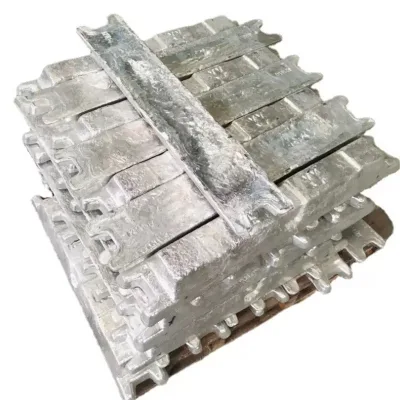
Buyers should observe that many suppliers offer customization options, including tailored packaging and specific surface treatments like bright, smooth, or galvanized finishes. The presence of brands such as CHINT alongside generic descriptions indicates a mix of established manufacturers and trading companies in the supply base. Furthermore, the observed application tags, which include overhead, heating, and underground uses, suggest that some listed ingots may be processed into wires or cables, implying that buyers should verify whether the ingot is intended for direct remelting or for downstream fabrication into specific forms like round wire or sheets.
Technical Specifications to Verify
Purity is a primary technical differentiator, with many listings specifying aluminum purity of ≥99.7% or 99.7min, while others claim higher grades such as 99.90% or 99.80%. Buyers must verify the exact chemical composition, ensuring that the material is classified as non-alloy and belongs to the 1000 Series if high conductivity or corrosion resistance is required. It is crucial to confirm whether the product is primary or secondary aluminum, as this distinction significantly impacts mechanical properties and suitability for high-performance applications. The standard chemical composition is listed simply as Al, but detailed mill test certificates should be requested to confirm trace element limits.
Dimensional and physical specifications vary widely across suppliers, with some offering ingots with sizes like 780mm x 150mm x 80mm, while others provide flexibility in width from 50mm to 1950mm for sheet or strip forms derived from the ingots. Tolerance levels are often cited as ±1%, but buyers should negotiate specific tolerances based on their downstream processing capabilities. Additionally, the production process is typically smelting, and the material shape is often round wire or standard ingot blocks; however, buyers must clarify if the supplied product is the raw ingot or a pre-processed form, as this affects handling, storage, and melting efficiency in the foundry.
Compliance and Safety Documentation
Documentation is critical for verifying the quality and origin of aluminum ingots, with many suppliers providing Mill Test Certificates (MTC) as a standard proof of compliance. Buyers should insist on MTCs that detail the chemical analysis and mechanical properties for each batch, ensuring they match the ordered specifications. While some listings mention certifications such as ISO9001, RoHS, EN, GB, JIS, and ASTM, buyers must verify that these certifications apply to the manufacturing facility and the specific product line, rather than assuming blanket compliance across all supplier offerings.
Origin and standard compliance are also key verification points, with products frequently originating from Shandong, China, and adhering to standards like EN, GB, JIS, and ASTM. However, buyers should not rely solely on the listed standard codes; instead, they should request the specific version or year of the standard being followed, as these evolve over time. For applications requiring strict environmental or safety compliance, such as RoHS, buyers must ensure that the supplier can provide up-to-date test reports confirming the absence of restricted substances, particularly if the ingots are intended for electronics or consumer goods manufacturing.
Cost Drivers and Commercial Terms
The cost of aluminum ingots is influenced by several factors, including purity, alloy content, and market volatility, with observed MOQs starting as low as 1 ton for some suppliers. Buyers should be aware that lower MOQs may come with higher unit prices, while larger volumes might offer better pricing but require significant storage and handling capacity. Payment terms are commonly structured as 30% TT advance and 70% balance, which is a standard practice in international trade but requires buyers to assess the financial stability and reputation of the supplier to mitigate risk.
Delivery times are typically cited as 7-12 days, but this can vary based on production schedules, inventory levels, and logistics availability. Buyers should clarify whether the quoted price includes packaging and shipping costs, as packaging options range from standard seaworthy packages to strong sea-worthy wooden crates or woven bags. Supply ability is often listed as 100 tons per month, but buyers should verify if this capacity is consistent and scalable, especially for large or urgent orders, to avoid supply chain disruptions.
Supplier Qualification and Quality Control
Supplier qualification should begin with verifying the production process and quality control measures, as most aluminum ingots are produced via smelting. Buyers should assess the supplier’s ability to maintain consistent purity levels and dimensional tolerances, requesting samples or third-party inspection reports before placing large orders. The availability of customization, such as specific packaging or surface treatments, indicates a supplier’s flexibility, but buyers should ensure that these customizations do not compromise the integrity of the aluminum during transport and storage.
Quality control should also include verifying the supplier’s adherence to their stated standards and certifications. Buyers should conduct audits or request references from existing clients to confirm the supplier’s reliability and consistency. Additionally, the use of standard exporting packages or customized packaging should be evaluated for its ability to protect the ingots from contamination or damage, especially if the aluminum is intended for high-purity applications where even minor impurities can affect performance.
Long-Term Procurement Checks
Long-term procurement success depends on establishing a robust relationship with suppliers who can provide consistent quality and reliable delivery. Buyers should implement regular quality audits and performance reviews to ensure that suppliers continue to meet agreed-upon specifications and standards. Monitoring market trends and price fluctuations can also help buyers negotiate better terms and secure inventory at optimal times, reducing the risk of cost overruns.
Furthermore, buyers should maintain a diversified supplier base to mitigate risks associated with single-source dependencies. This includes evaluating alternative suppliers in different regions or with different production capabilities. Regular communication and feedback loops with suppliers can help identify potential issues early and foster continuous improvement in product quality and service delivery, ensuring a stable and efficient supply chain for aluminum ingots over the long term.
FAQs
What certifications do the aluminum ingots have?
The aluminum ingots hold ISO9001, RoHS, EN, GB, JIS, and ASTM certifications. They also come with an MTC document. These standards ensure quality and compliance for international trade requirements.
Which purity levels are available for unalloyed ingots?
Available purity levels include 99.90%, 99.80%, and 99.70% minimum. The product specifications confirm a purity of at least 99.7%. These grades are suitable for remelting and various industrial applications.
Can I customize the packaging for aluminum ingots?
Yes, customization is available for packaging requirements. Standard options include strong seaworthy wooden packages or standard exporting packages covered with woven bags. Buyers can request specific packing solutions to meet their logistics needs.
What is the minimum order quantity for these ingots?
The minimum order quantity is 1 ton. This low MOQ allows for flexible purchasing for various project scales. Buyers can start with small quantities before committing to larger bulk orders.
How long is the delivery time for aluminum ingots?
The delivery time ranges from 7 to 12 days. This lead time applies to standard orders from the Shandong, China origin. Fast shipping ensures timely supply for urgent production schedules.
What supply ability does the manufacturer offer?
The manufacturer offers a supply ability of 100 tons per month. This capacity supports consistent supply for regular industrial needs. Buyers can rely on this steady output for their production planning.
Which payment terms are accepted for these ingots?
Accepted payment terms include 30% TT deposit plus 70% balance. This structure is standard for securing orders and managing cash flow. Buyers should arrange the initial deposit to initiate the production process.